Blog Article
If you are thinking about installing solar panels, one question often comes up...
Will they improve my BER rating?
Yes, in many cases solar panels can help improve your BER, but they are not a quick fix on their own. Your BER rating looks at the overall energy efficiency of your home, so while solar can certainly help, the final outcome will also depend on factors like insulation, airtightness, heating systems, and how the installation is recorded during the assessment.
What is a BER rating?
Think of a BER (Building Energy Rating) as an overall report for your home’s energy habits. Used across Ireland, this scale grades houses from A to G. Getting an A means your home is efficient at the highest level, it stays warm and keeps your bills low. On the flip side, a G rating suggests the place is essentially a "draft-catcher" that’s going to need a lot more help (and heat) to stay comfortable.
A BER is not based on your actual bills. It is a calculated rating, sometimes called an asset rating, which means it looks at the building itself and the systems installed in it rather than how much energy the occupants personally use.
How is BER calculated?
To figure out that A-to-G grade, Irish assessors use a system called DEAP (Dwelling Energy Assessment Procedure). It’s essentially used to measure how much energy your home devours and how much carbon it breathes out.
It's an inspection of the "health" of your house.
Instead of just looking at one thing, the calculation balances:
- How you heat your rooms and your water.
- Your lighting and how the house breathes (ventilation).
- How well your walls, floor, and roof hold onto heat.
- Renewable energy, like Solar Panels.
While sticking solar panels on the roof is a brilliant move, they’re just one piece of the puzzle. A top-tier rating is really about how well the whole house works.
Can solar panels improve your BER?
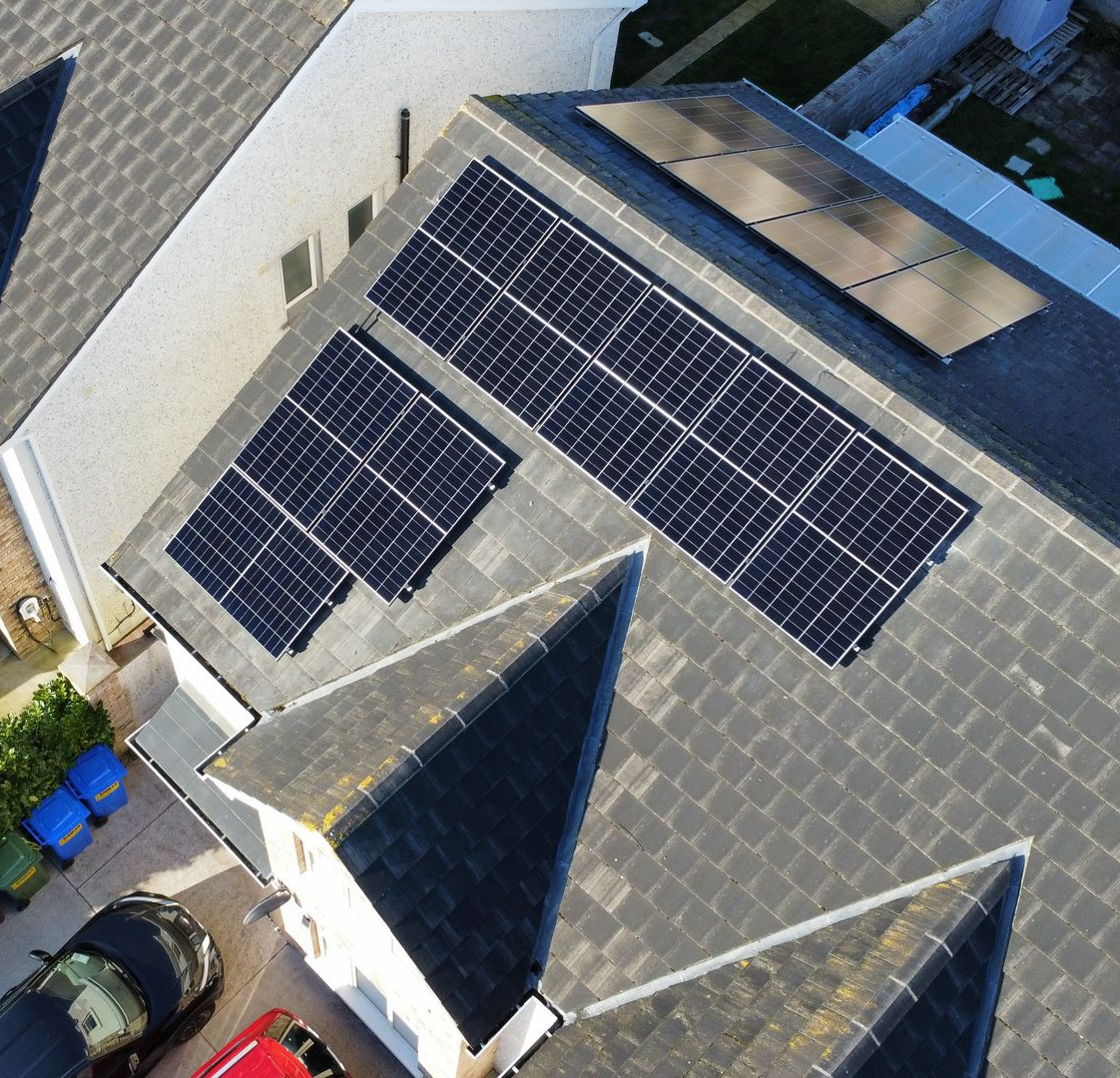
Yes!. By generating your own electricity on-site, you’re leaning less on the grid, which gives your home a major thumbs-up in the official DEAP calculations.
However, it’s not a "one size fits all". You could have two identical solar setups on two different houses and see completely different results. The actual impact on your grade depends on a couple of things:
- If your home is already fairly efficient, solar might push you over the finish line to an A-rating. If the house is currently an E-rating, solar has a much steeper hill to climb.
- It sounds obvious, but the direction your roof faces and whether it’s shaded by trees or neighboring buildings changes everything.
- Naturally, the number of panels you install matters.
- If your insulation is poor or your heating system is ancient, even the best solar panels can't do all the heavy lifting.
- This is the boring but crucial bit. If you don't have the right technical data sheets or certificates for the assessor to scan, they often have to use "default" (and usually worse) values in their report.
Basically, solar panels are fantastic, but the final BER grade depends on the whole house.
When solar makes the biggest difference
Solar is often the finishing touch, not a standalone fix. It performs best when the rest of your home is already running efficiently.
If you’ve taken care of the fundamental, like proper insulation and an efficient heating system, the energy your panels generate can make a real difference to your BER. It’s much easier to see the impact of solar when your home isn’t losing heat through the walls or roof.
This reflects how the DEAP system actually works. It doesn’t assess upgrades in isolation, it looks at how everything works together to create a comfortable, energy-efficient home.
When other upgrades may matter more
If your home is losing heat through poor insulation or drafty windows, solar panels won’t be a quick fix for your BER. It’s like trying to fill a bucket with a hole in the bottom, you can keep adding energy, but it’s still escaping.
In many cases, you’ll see a much bigger improvement by focusing on the fundamentals first. These upgrades reduce how much energy your home actually needs to stay warm, before you even start generating your own:
- Insulation upgrades: Topping up the attic or improving cavity wall insulation
- Airtightness: Sealing drafts and preventing heat loss
- Heating controls: Making sure you’re only heating the spaces you use
- Efficient heating systems: Upgrading to a modern boiler or heat pump
These improvements tackle the problem at its source by reducing your home’s overall energy demand. Solar is a powerful addition, but it delivers the best results when it’s part of a complete, whole-home approach rather than a standalone solution.
Why documentation matters
What often surprises homeowners is that the paperwork matters nearly as much as the solar system itself.
A BER assessment is based on evidence, not assumptions. If the assessor does not have the correct documents in front of them, they cannot simply take a homeowner’s word for what was installed. Instead, they may have to rely on default values, which are more cautious estimates and may not fully reflect the performance of the system.
To make sure your solar installation is properly recognised, it helps to have all documentation organised, including:
- technical data sheets for the panels and inverter.
- commissioning reports and certificates.
- product documents confirming exactly what was installed.
This is one of the reasons choosing the right installer matters. If the paperwork is incomplete or unclear, it can affect how the system is reflected in the BER assessment, even if the installation itself is excellent.
If your goal is to improve your BER, lower your running costs, and make your home more energy efficient, solar panels are definitely worth considering. Just remember: BER is not based on panels alone. It is based on how the whole home performs. That is why the best approach is to look at your property as a complete system. Roof, insulation, heating, and solar working together. If you would like to chat to us about your BER rating and how much Solar Panels can help, get in touch today.